

Our Vision
We envision collaborative governance that empowers all stakeholders—residents, community organizations, businesses, and local government—to shape local policies, budgets, and outcomes.
Current Issues
Trust in Our City Government
Our coalition has identified recurrent challenges residents face in working with our City government, which have eroded community trust in our local government.
The City's own Community Satisfaction Survey results confirm this issue. The percentage of residents who reported good overall confidence in Lawrence government was 27%, honesty was 38%, transparency and overall direction were both 35%, and the belief that the City acts in the community's best interest was 33%.
All of these scores fell below both the City's own expected benchmark and the national benchmark, which indicates that this low level of trust is local and specific, rather than being due to a nationwide decline in trust in government. We believe this is the most fundamental challenge the community and City face in their relationship.
Many community members have shared their challenges in working with the City, but we suspect they persist, at least partly, because City staff do not believe these issues exist or are significant. So our coalition has compiled case studies from the last few years to demonstrate that the challenges we report actually do exist and represent a pattern of behavior. Here’s one case study, and you can read our full report here.
Land Development Code Revision
In 2022, the City started a two-year process to revise their Land Development Code, which was the Code’s first major rewrite since 2006.
The LDC Steering Committee was directed by the City Commission “to oversee and provide direction throughout the code update process,” but the consultants’ process did not allow the committee to adequately provide this oversight and direction. The committee met 18 times over two years to discuss the revision process, but they never voted on anything. Staff and consultants often promised to follow up on items and questions raised in meetings, but they rarely did.
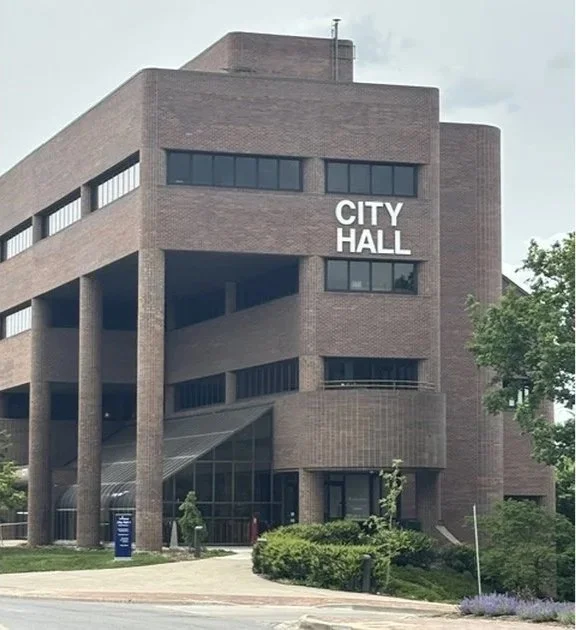
The public could only engage with the LDC revision process by submitting written comments to the steering committee.
The public could not participate in the steering committee discussions. Public comment was listed on the first committee agenda and then dropped for all future meetings.
Residents followed hours of meetings, trying to understand and engage with the process, but their questions and concerns remained unanswered.
The City’s consultant, Clarion Associates, revised the drafts of this 500-page document repeatedly without announcing what had changed, making it extremely challenging for community members to identify and respond to what had been changed. For example, the July 2024 draft added data centers as a permitted use without marking this change, so the community did not know of this addition until more than a year after the LDC was approved. (See below for more on this issue.)
When the consultants did provide a redlined version of the code to the Planning Commission, they submitted it so late that residents could not even submit written comments on it.
Only two steering committee members represented residents and neighborhoods, while the rest of the committee represented interests such as real estate, transit, and homeless services. The resident representatives’ concerns were unaddressed.
Additionally, he school board president also requested a seat for the school district on the steering committee because housing development affects the district heavily, but she was told that the committee had no place for the district.
The consultants’ public engagement about the LDC did not fulfill the City’s commitment to collaborative community engagement.
Public engagement consisted mostly of presentations. At eight open houses, staff and consultants presented the same material, took questions without answering them, and collected comments on sticky notes.
Staff and Commissioners met with residents one-on-one but would not answer their questions in writing, and staff told at least one resident to file an open records request if they wanted answers.
Neighborhood groups pressed for direct meetings, and in July 2024 the project team held 16 listening sessions of 30 minutes each, only with groups that had requested one. Residents asked questions at those sessions, and staff promised answers that never came.
The project’s final report cites these sessions, along with surveys and “Meetings-In-A-Box,” as evidence of public engagement.
The process ended in conflict. On Nov. 12, 2024, about 200 residents attended the City Commission meeting, and more than 50 spoke about the 1,500-page agenda item. Most asked the Commission to pause and return the code to the Planning Commission.
Commissioner Lisa Larsen objected that staff slides described items the steering committee had “approved” and “supported” when the committee had never voted. “For those who wanted to make those comments, they didn’t get an opportunity to do that,” she said. “So to me, the process was broken.” Commissioner Brad Finkeldei, who chaired the steering committee, told residents they “could have brought this up anytime in the last two years,” even though community members had been raising their concerns through their limited means for two years. The Commission adopted the code 4-1, with Larsen opposed.
Follow-through has been limited since adoption. Clarion told the Commission the City would revisit the code after about six months of “living with” it to catch unintended outcomes. City staff did put a discussion about the LDC on the Commission’s agenda more than a year after the LDC went into effect, but staff gave no presentation and provided no clear structure for the discussion, so residents were unsure what to expect from it. The City also committed to developing a formal process for residents to propose amendments, but they have not developed one.
_____________________________
Recurrent Issues Demonstrated in This Case Study
Transparency: Lack of Post-meeting Documentation, such as Minutes and Follow-up Items, Timeliness of Information Provided, and Unanswered Resident Questions and Emails.
Community Engagement: Informational/Non-collaborative Community Engagement Events, Lack of Resident Influence on Advisory Boards and Committees, and Lack of Staff and/or Commission Response to Residents.
Accountability: Lack of Consistent Meeting Protocols, Lack of Staff Follow Up/Follow Through, Over-Reliance on Consultant Opinions, and Resident Input Not Reflected in Decision-Making.
Local Issue Research
by KU Graduate Students
KU graduate students in the Urban Planning Department’s Politics and Planning class researched recent Lawrence projects and issues. They interviewed community members and City staff, researched public records, and wrote papers analyzing these issues and providing policy recommendations.
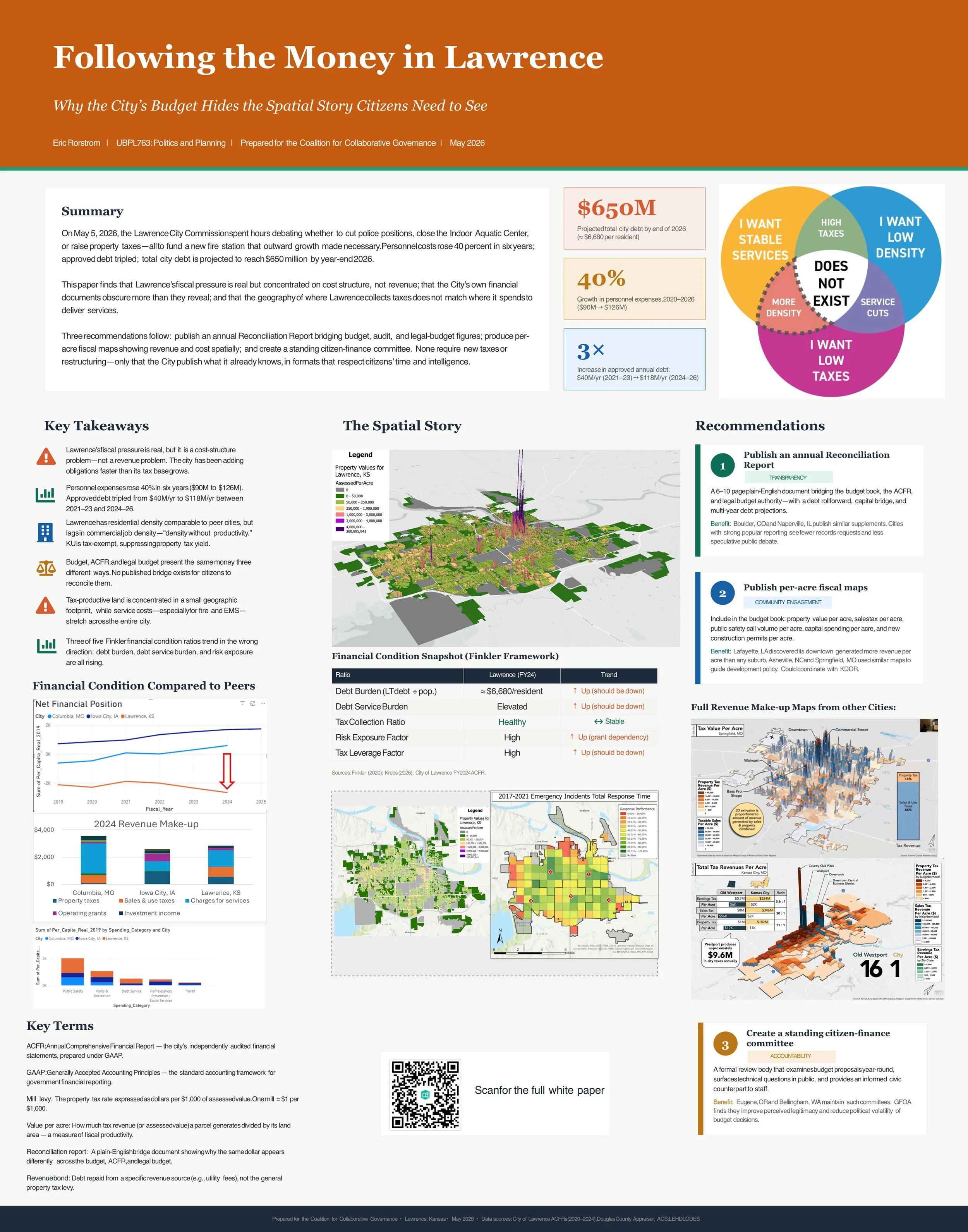
Our coalition was fortunate to participate in this project by identifying research topics and meeting with the students to share our experiences related to these issues. Topics include affordable housing incentives, City budget, data centers, KU’s tax incentives, the Farmer’s Market permanent home, solar energy projects, and much more! And here’s a cool poster on the City budget.
Our Coalition’s Goals
Develop Relationships
Develop more collaborative relationships between our local governments and their residents.
Identify Issues and Successes
Identify recurrent challenges and successful practices in local governmental processes.
Promote Solutions
Promote solutions to make our local government’s cultures, policies, and practices more transparent, collaborative, and accountable.